
File by April 30
The return for a calendar year is due by April 30 of the next year. Filing late when you owe tax can add penalties and interest; filing late when you are owed a refund or benefits delays the money.
Filing your taxes
A guided walkthrough for international students: which boxes to tick, which slip goes where, and the questions that trip people up.
The return for a calendar year is due by April 30 of the next year. Filing late when you owe tax can add penalties and interest; filing late when you are owed a refund or benefits delays the money.
Filing is how the CRA works out benefits such as the Canada Groceries and Essentials Benefit (which replaced the GST/HST credit in July 2026), and it records your unused tuition amounts so you can use them in later years when you earn more.
Many international students who come to study and set up a home here are residents of Canada for tax purposes, but it depends on your residential ties, such as a home, a spouse or dependants in Canada. The CRA explains the categories, and if you are unsure you can ask for its opinion with Form NR74.
UFile ONLINE is free for post-secondary students at any income, including NETFILE, with its student code. Free tax clinics run by volunteers also help people with a modest income and a simple tax situation.
Your Social Insurance Number (SIN), if you have one.
Every slip you received: T4 from each job, T4A for scholarships or awards, T5 from your bank if you earned interest, and T2202 for tuition (download it from Bear Tracks).
The date you arrived in Canada, if this is your first return, and any income you earned before arriving.
Last year's Notice of Assessment, if you filed before. It has the NETFILE Access Code; first-time filers do not need one.
From an empty return to NETFILE. The numbers on each screen match the list under its step.
Source: Foreign property (Form T1135)
Source: Newcomers to Canada and the CRA
Source: Scholarships, fellowships and bursaries (line 13010)
Source: NETFILE overview (CRA)
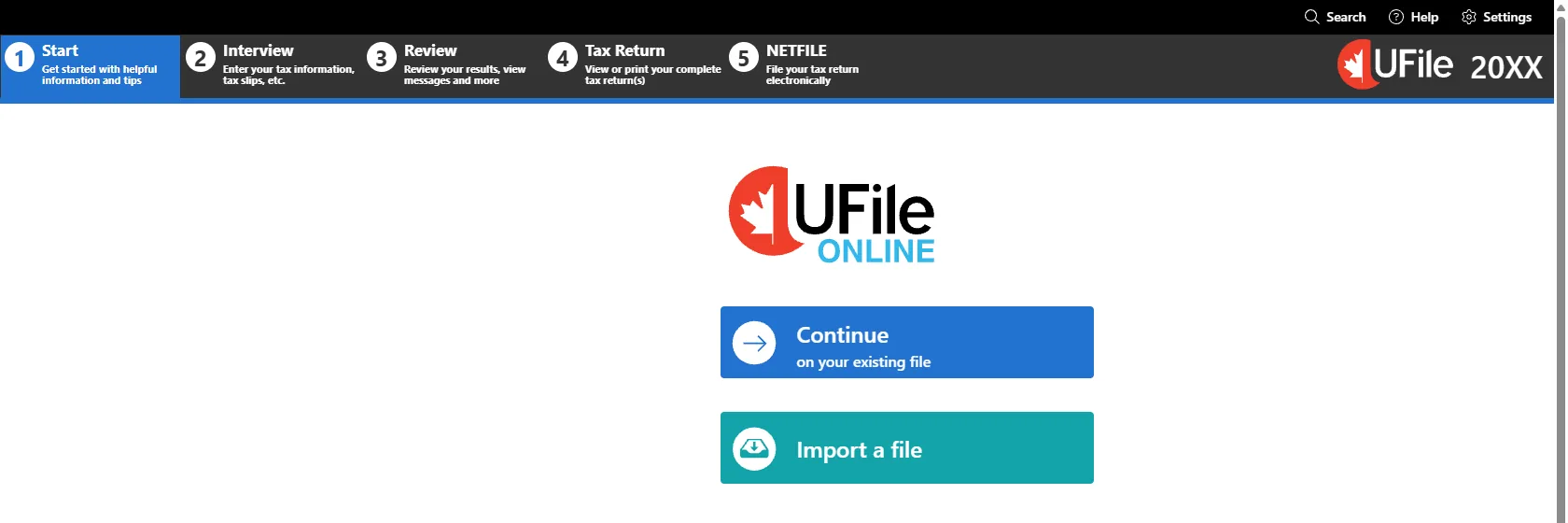
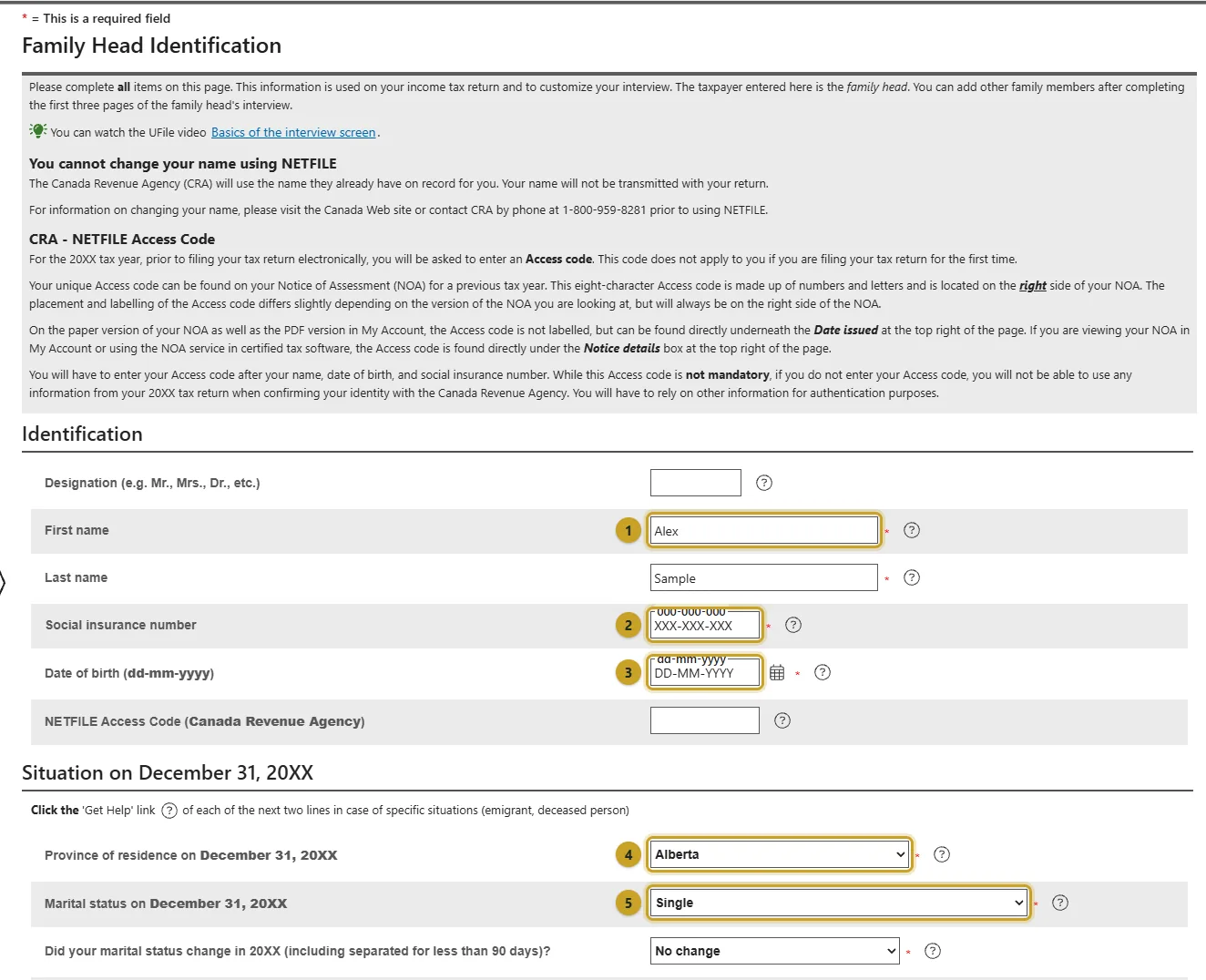
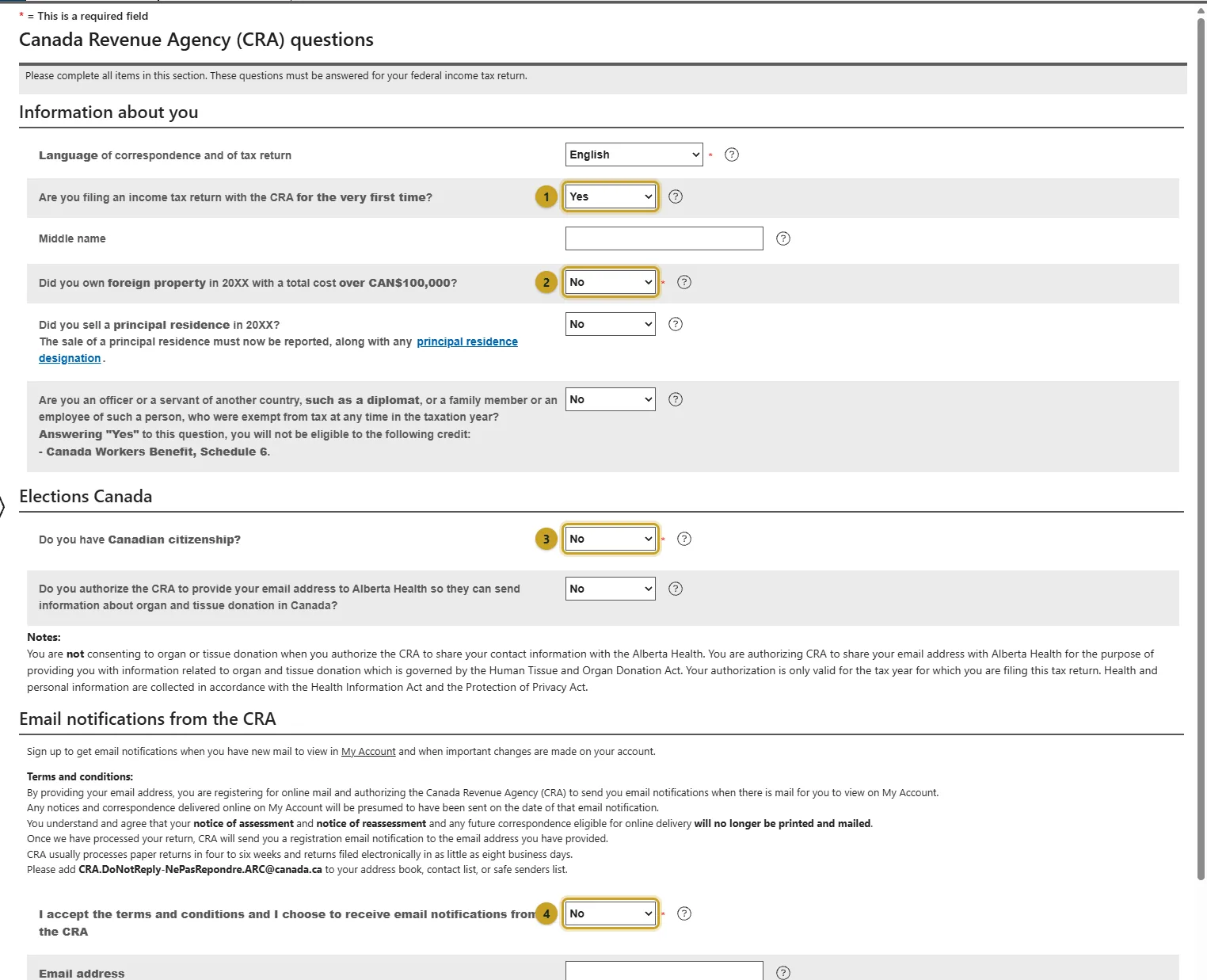
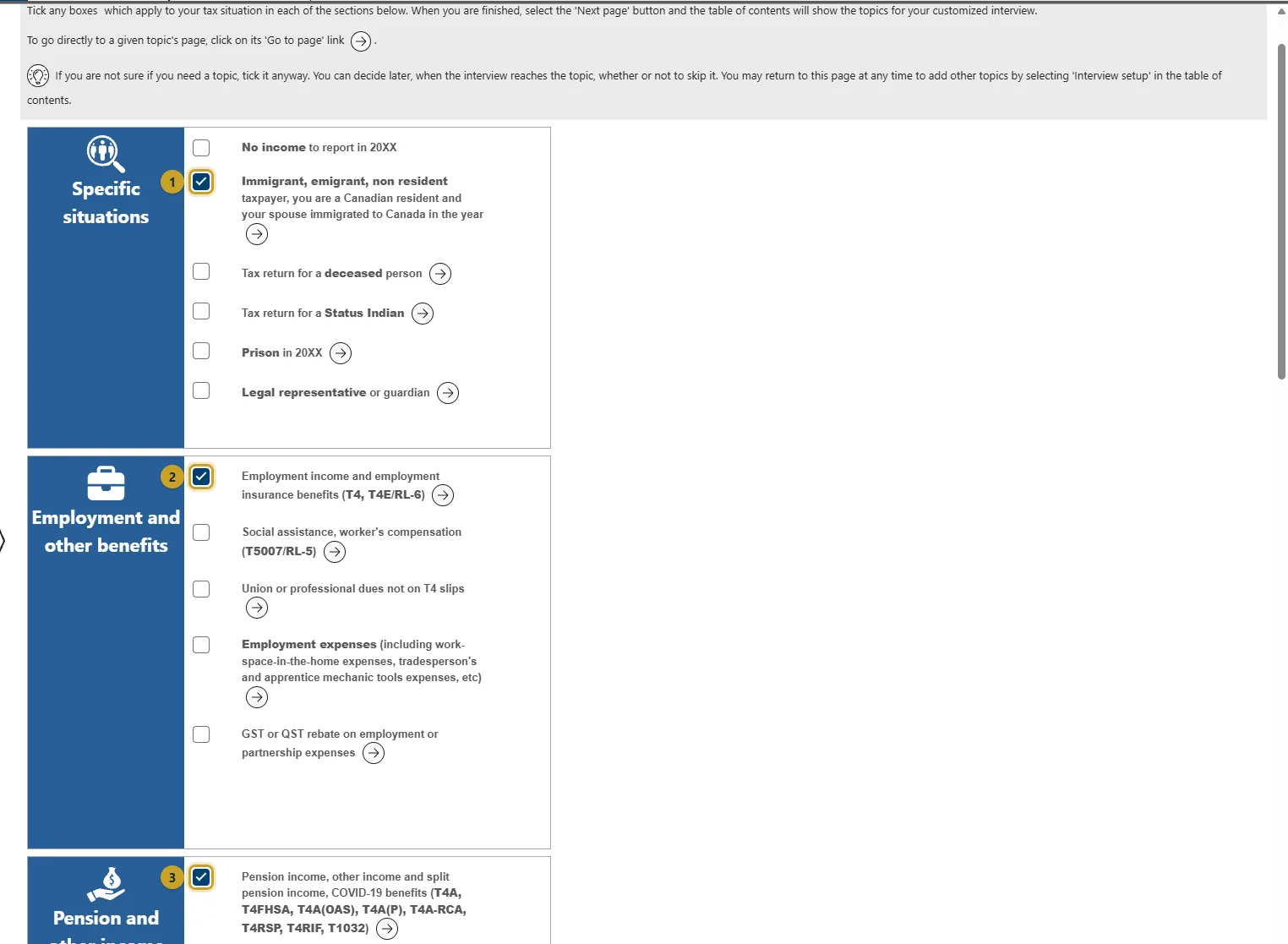
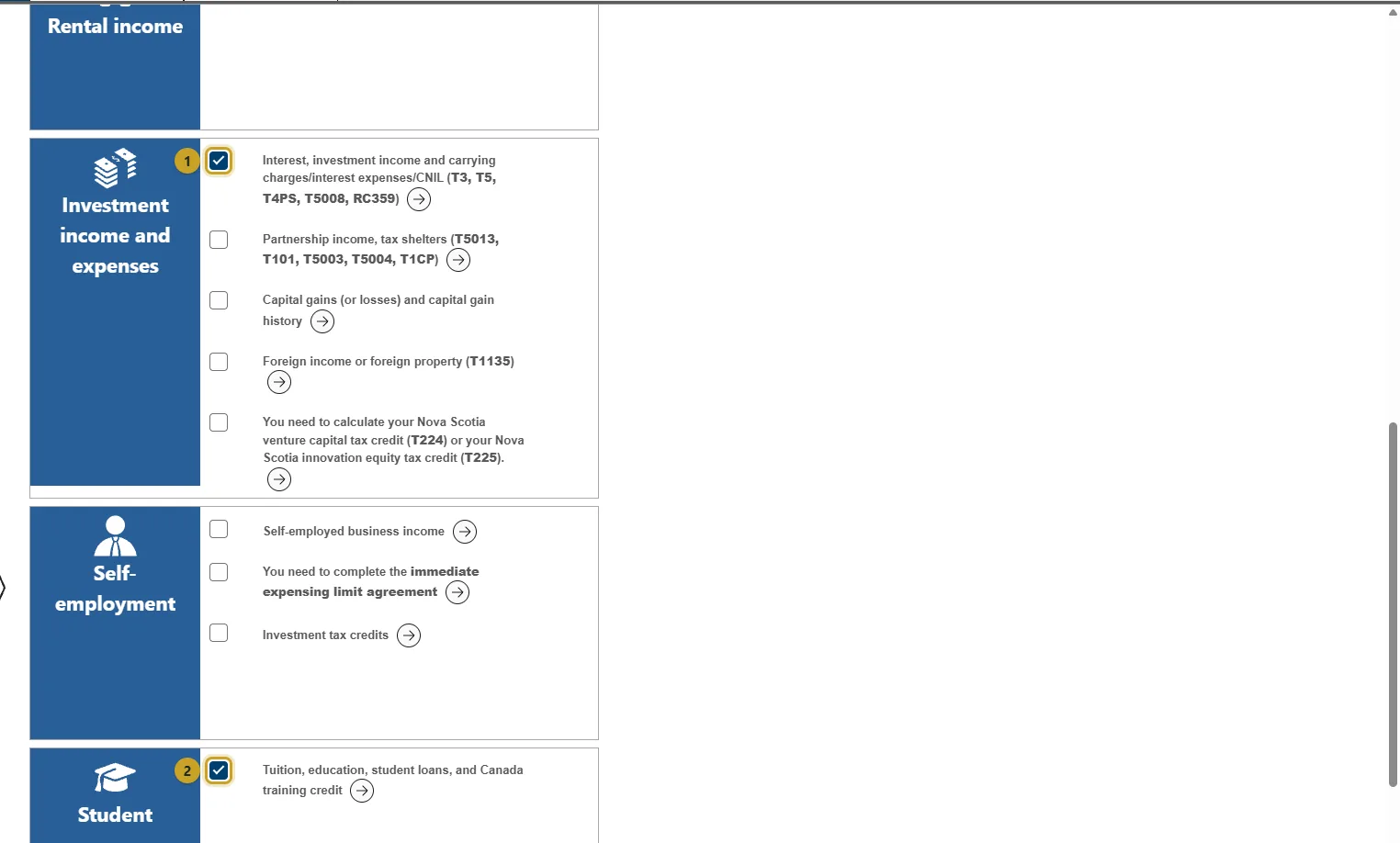
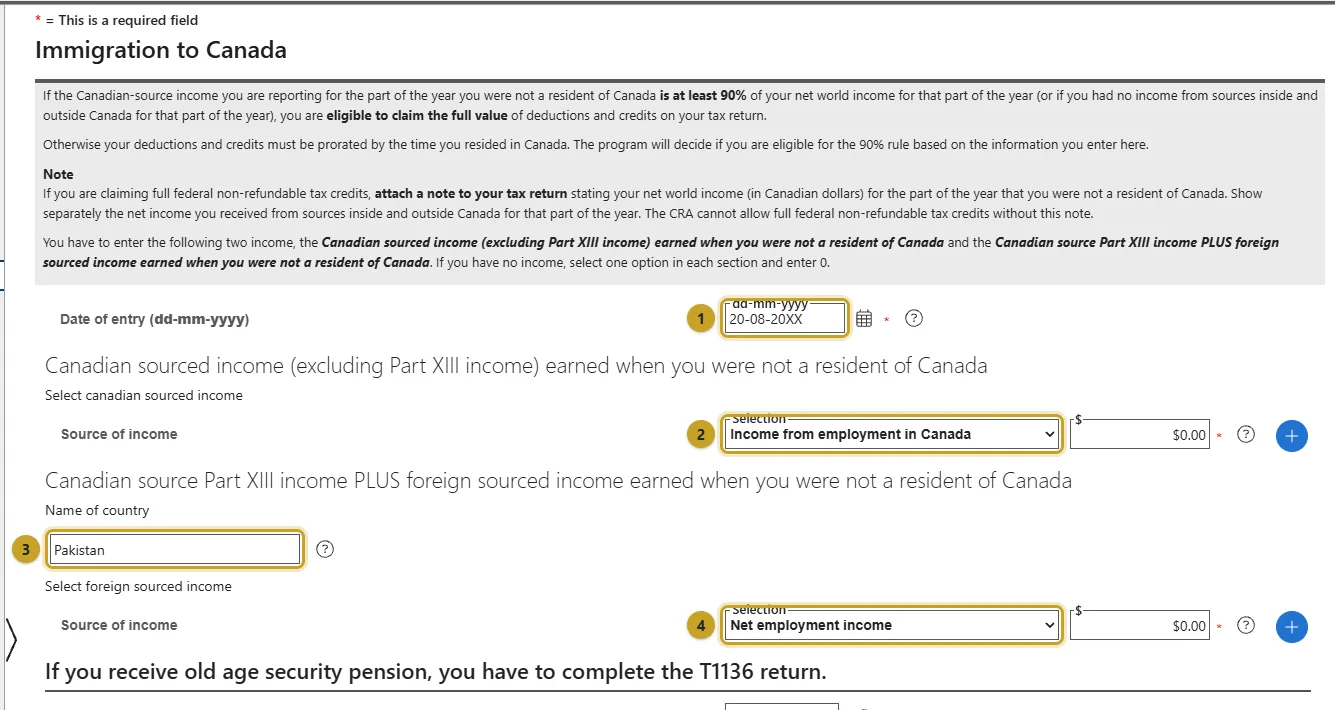
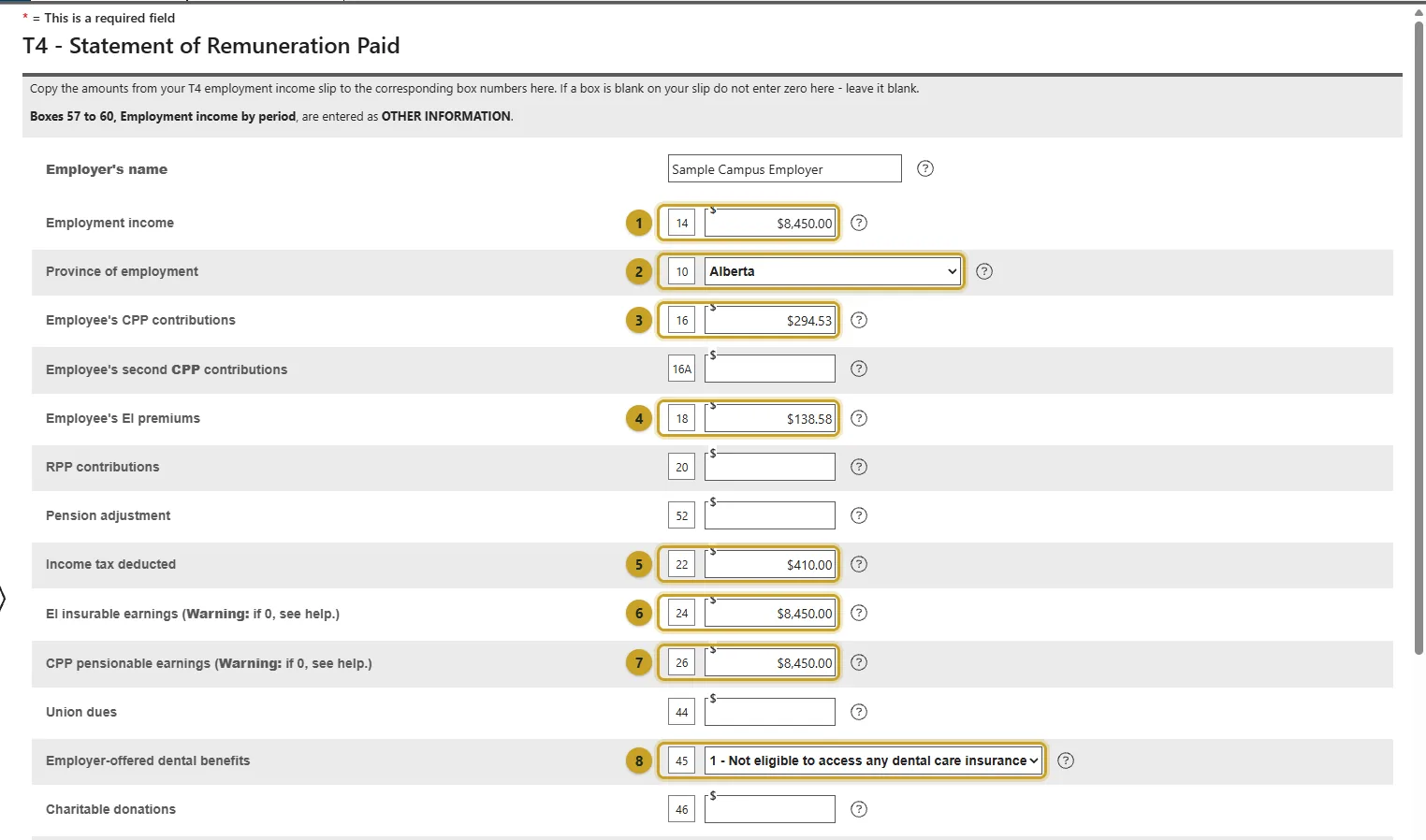
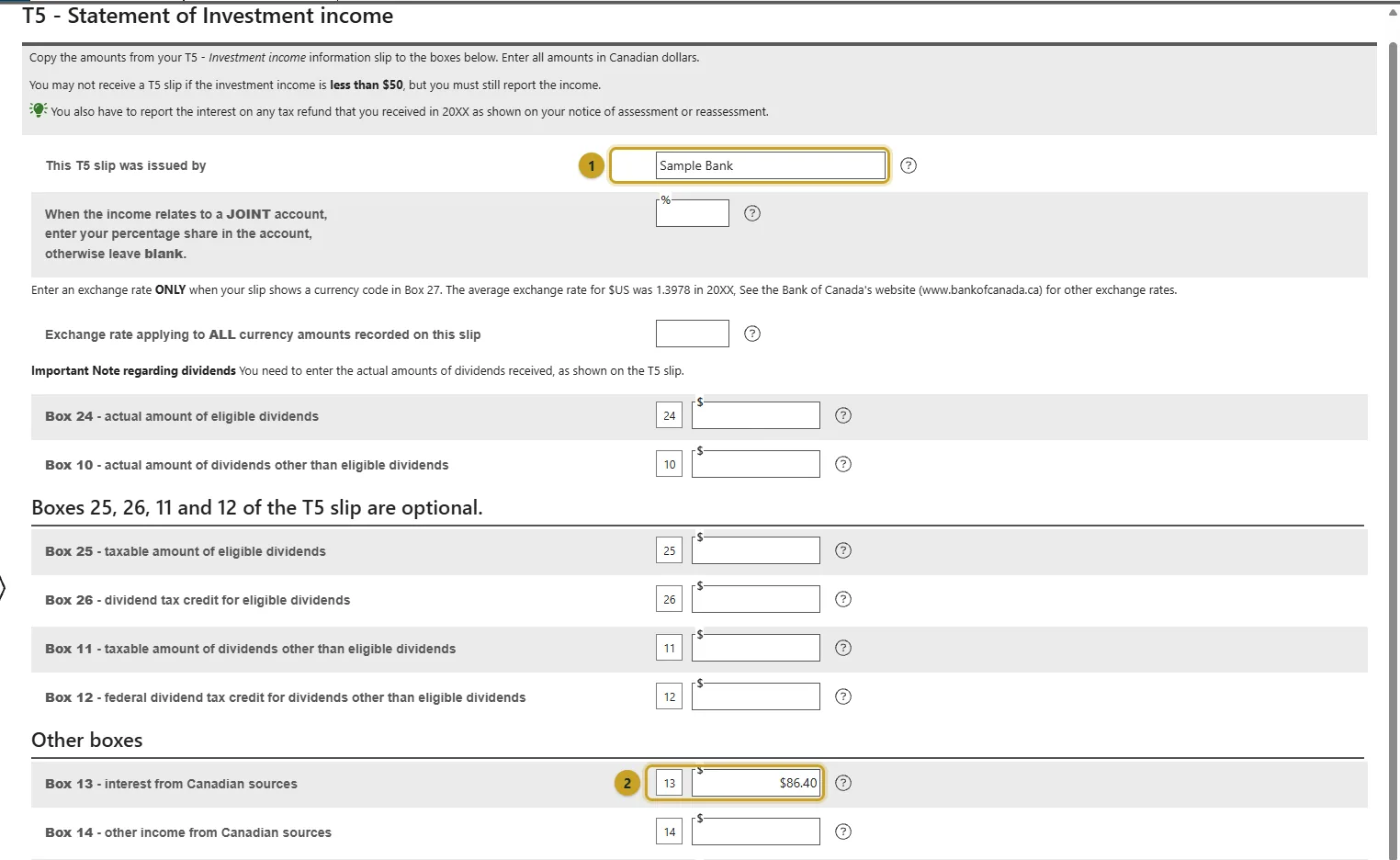
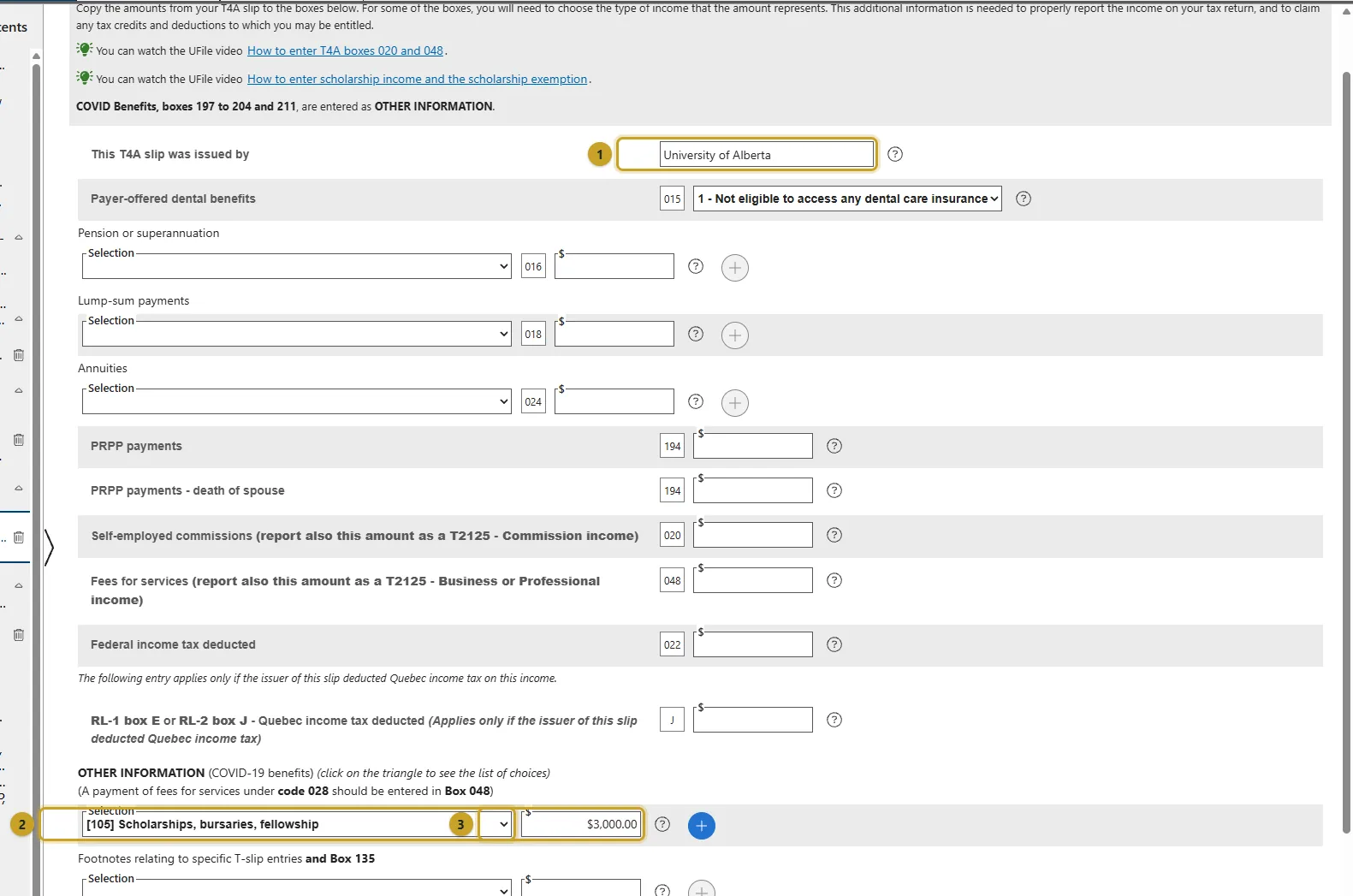
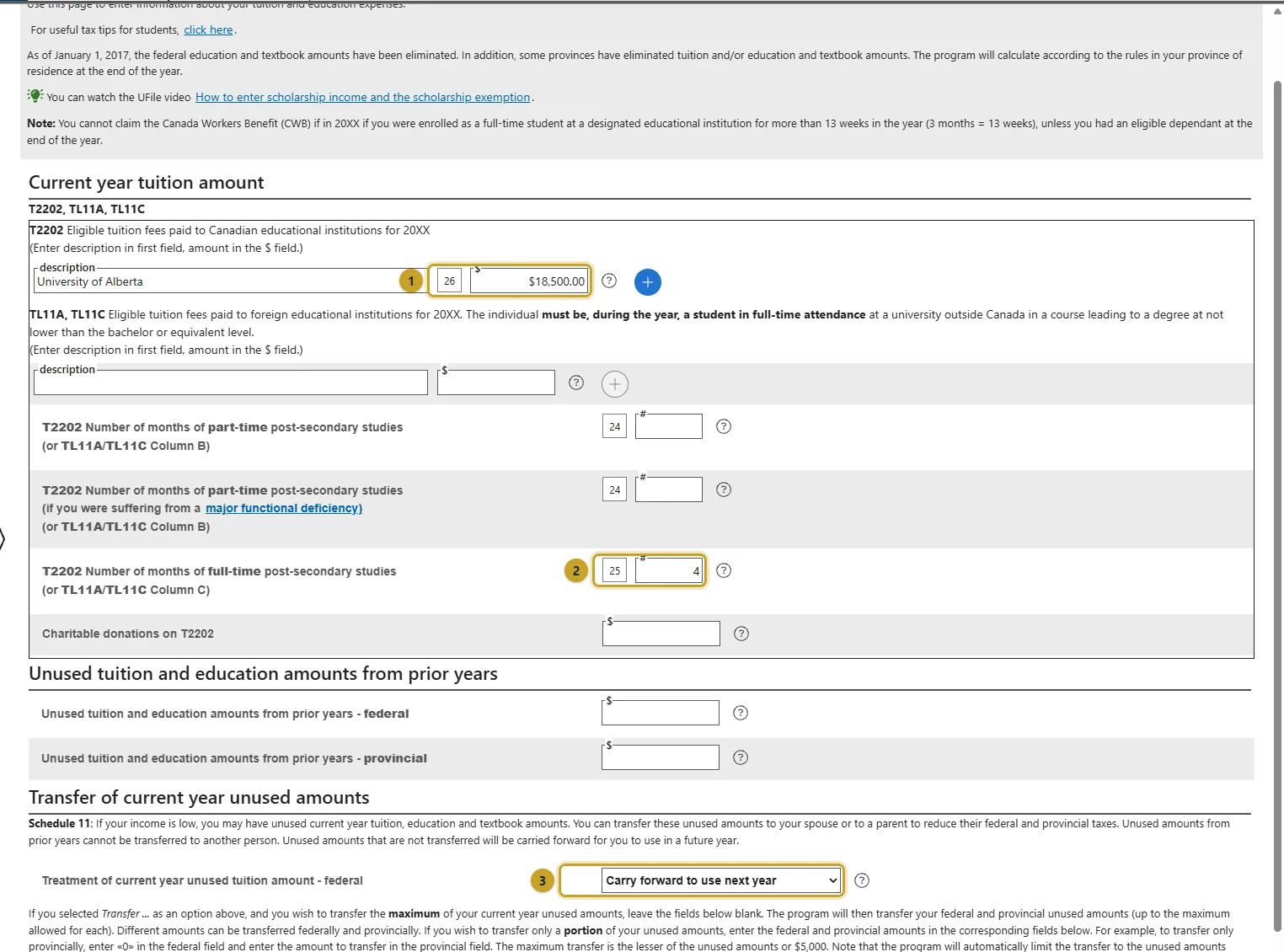
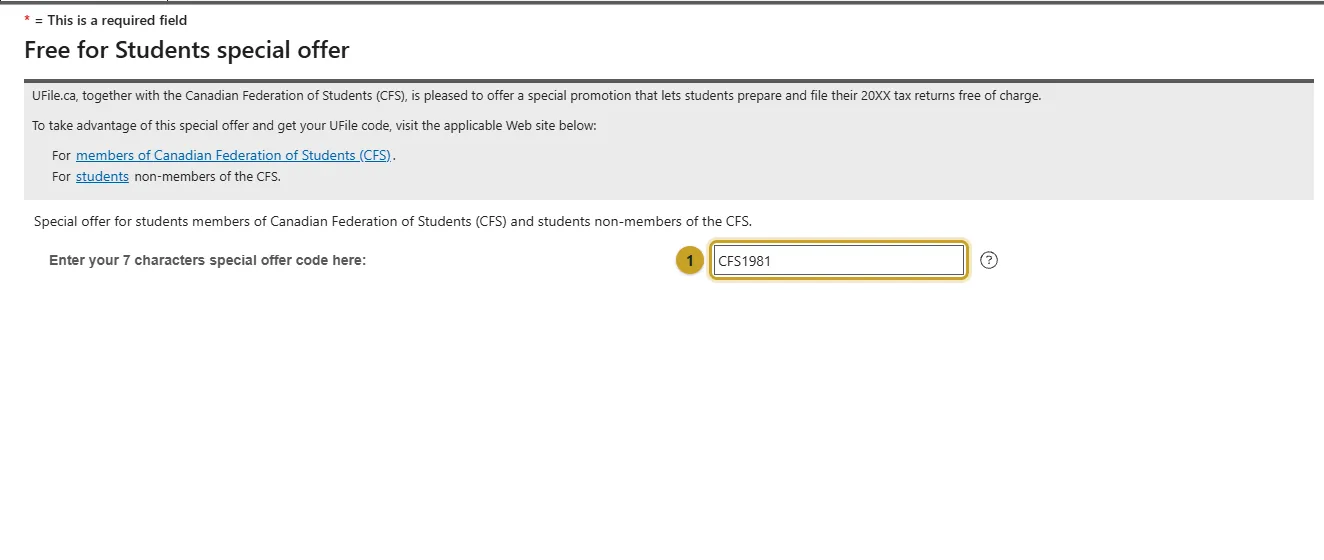
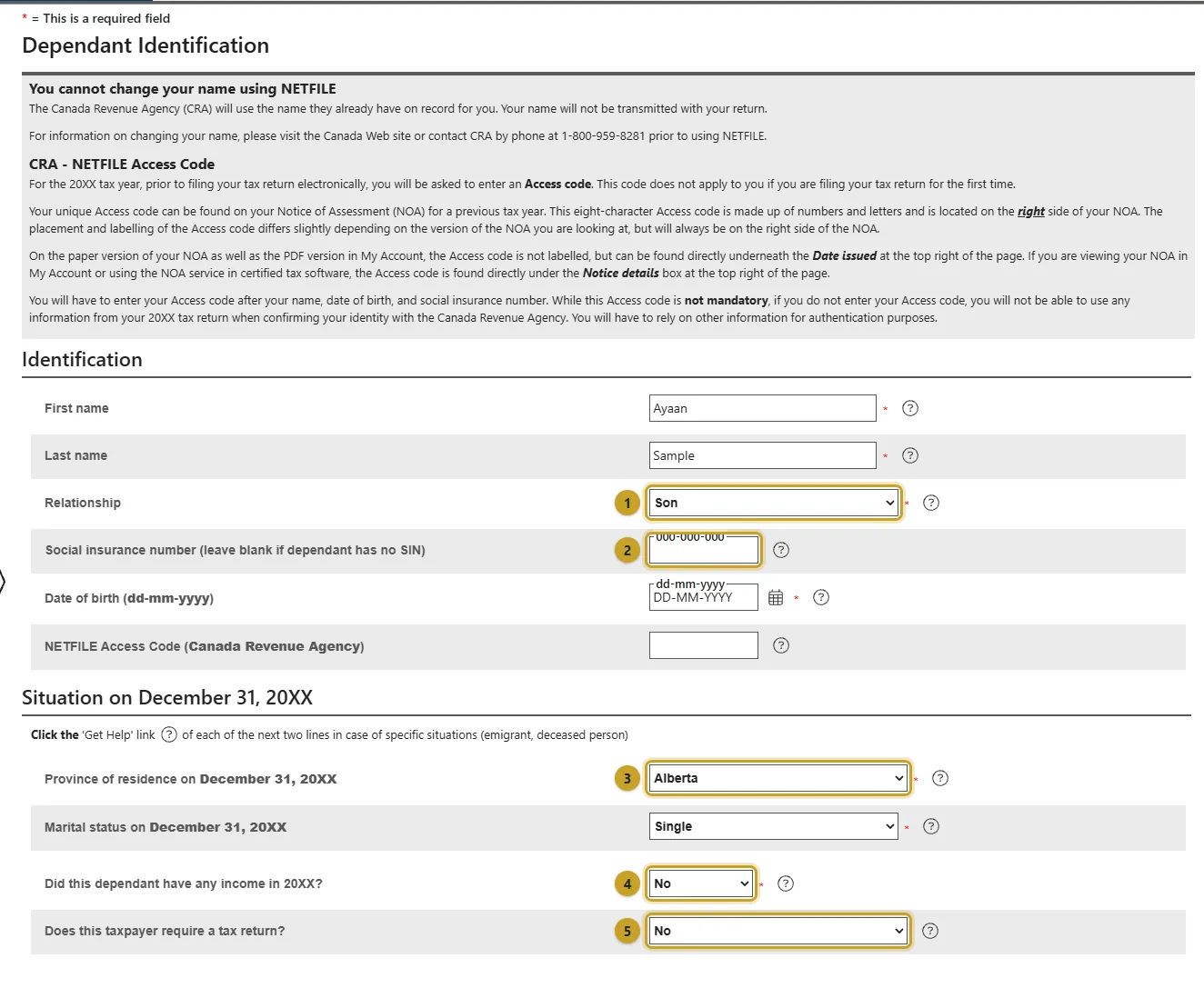
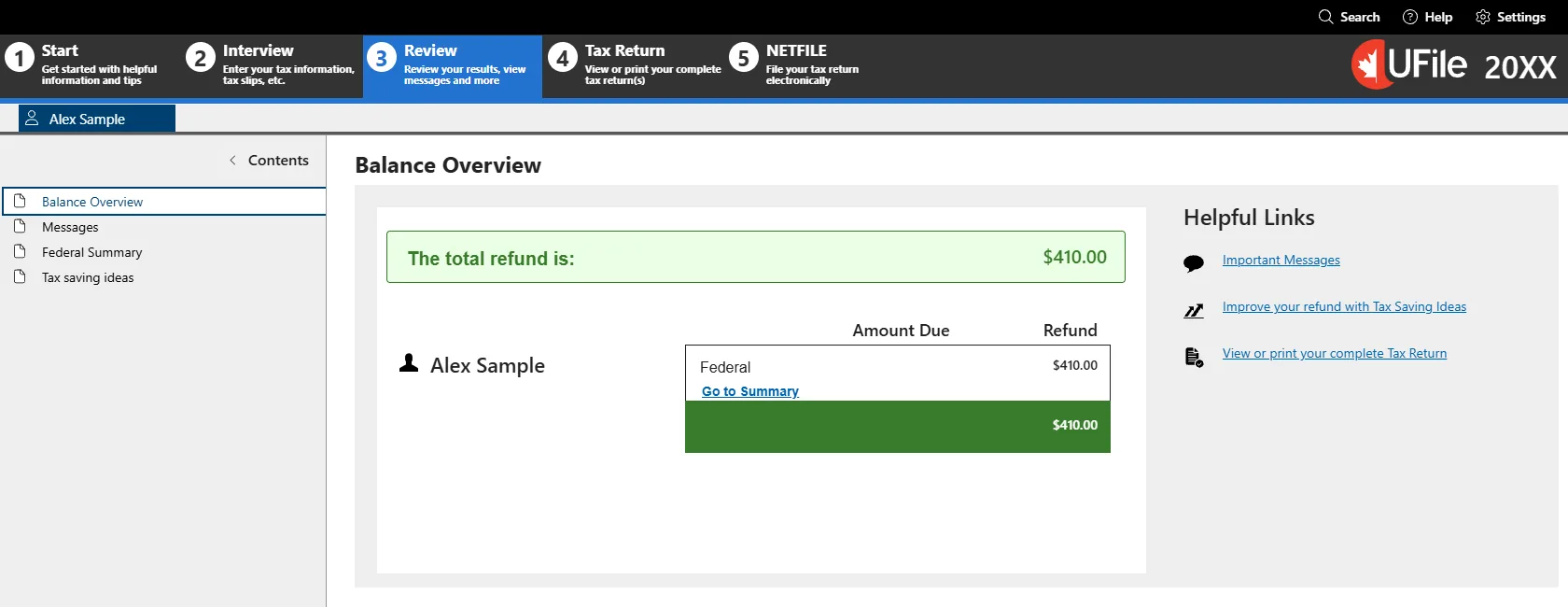
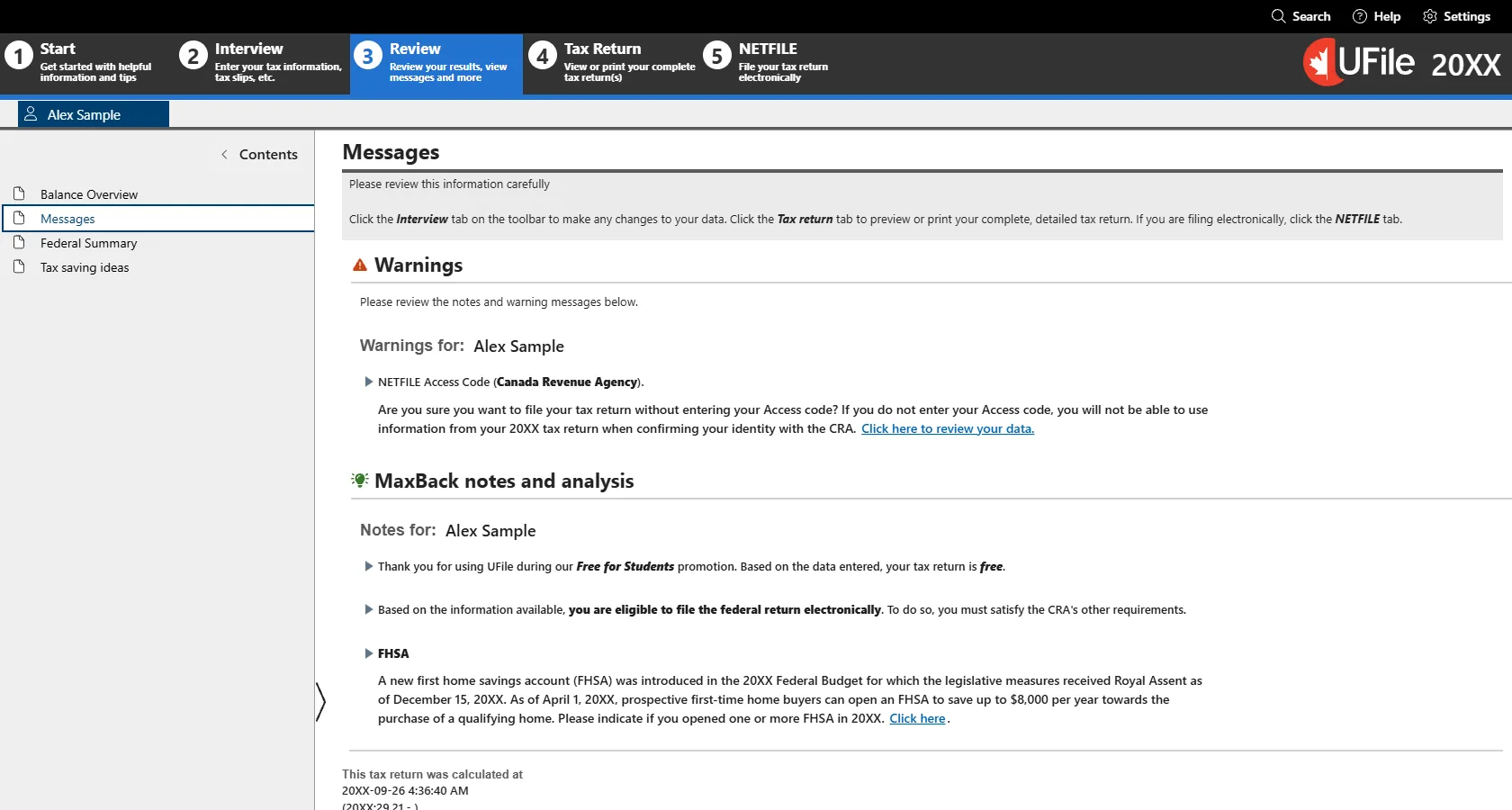
Any CRA-certified software can file your return with NETFILE. UFile ONLINE is free for post-secondary students at any income, NETFILE included: you enter its student code on the Special offers page after your T2202. If you would rather have a person do it, free tax clinics run by volunteers help people with a modest income and a simple tax situation. The Filing your taxes page on this site walks through UFile screen by screen.
A T4 from each employer for work income, a T4A for scholarships, bursaries and awards (box 105), a T5 from your bank if you earned $50 or more in interest, and a T2202 for tuition, which UAlberta students download from Bear Tracks. Slips for a year arrive early in the next year; wait until you have them all before filing, because a slip left off means the CRA changes your return later.
Before you rely on this
Usually not, but you still enter the slip. Post-secondary scholarships, fellowships and bursaries are generally fully exempt when you were a full-time qualifying student in the program the award supports. Enter the T4A box 105 amount and your T2202, and the software applies the exemption. Part-time students and research grants follow different rules.
You give the date you became a resident, report your world income from that date on, and report the income you earned outside Canada before arriving so the CRA can work out your credits and benefits. In UFile this is the Immigrant topic in Interview setup. To start receiving the Canada Groceries and Essentials Benefit for the year you arrived, newcomers send Form RC151, which is also available as a web form.
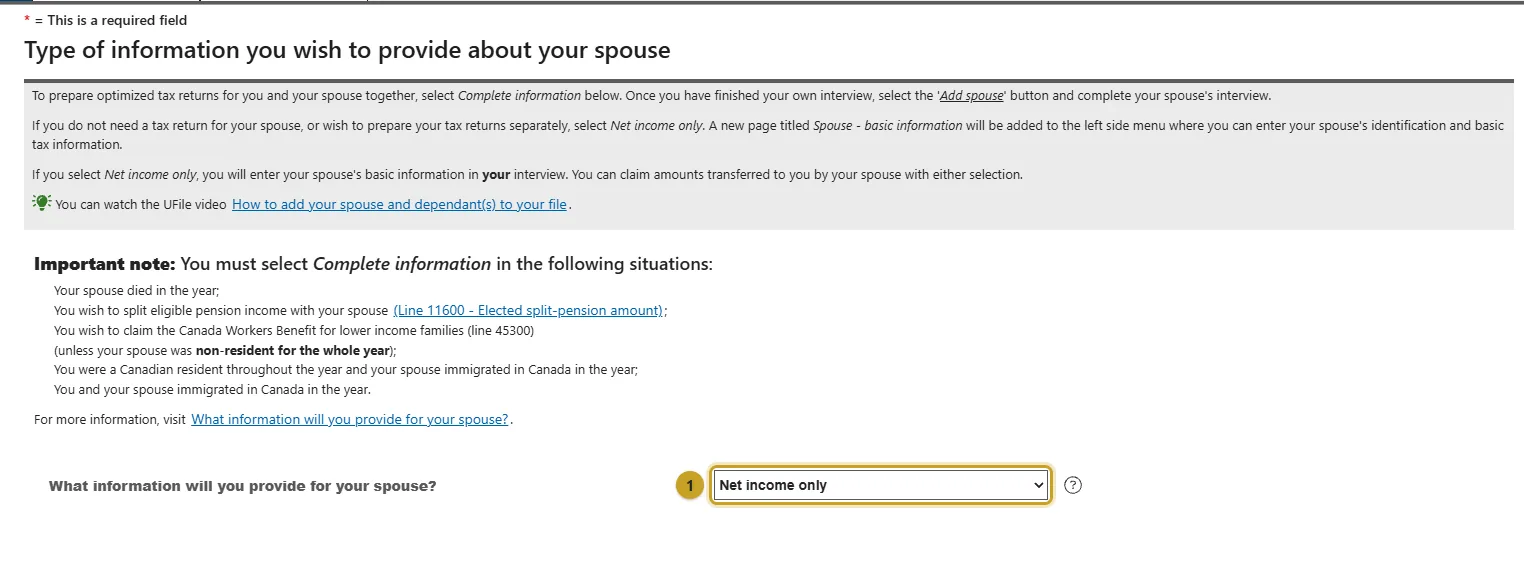
If you were married or common-law on December 31, you give your spouse's details and net world income in your return even if they lived abroad; in UFile that is Spouse interview type, set to Net income only when your spouse does not file in Canada. For benefits, the CRA also asks for a non-resident spouse's income on Form CTB9. The Canada Child Benefit needs the child to live with you, and a temporary resident qualifies only after living in Canada for the previous 18 months with a valid permit in the 19th month.
They carry forward. With little income you do not need the tuition credit to reduce tax this year, so it is recorded and waits for a year when you earn more, which for many students is after graduation. You can transfer part of the current year's amount to a spouse or parent instead, up to the federal maximum, but only to someone who files a Canadian return and can use it.
Only if the total cost of your specified foreign property, which includes money in bank accounts outside Canada, was more than CAN$100,000 at any time in the year. Then you file Form T1135 with your return; in UFile you answer Yes to the foreign property question on the CRA questions page. Below that amount, answer No.
Yes, in most cases. UFile's Review stage tells you whether your return is eligible for NETFILE. The Access Code from a previous Notice of Assessment is optional and does not apply to a first return, so leave it blank. After you file, keep the NETFILE confirmation number; your Notice of Assessment arrives afterwards and has the Access Code for next year.
When your situation is not the one shown here.
Volunteers prepare and file returns for free for people with a modest income and a simple tax situation. Many run on or near campus in March and April.
What to report in your first year, and how to apply for benefits with Form RC151.
The CRA's own guide for students: scholarships, tuition, moving and more.
Guidance, not tax advice
This is a student-made guide to finding your way around UFile, not tax advice and not an official CRA or University of Alberta source. Your own situation decides what you enter. When a question here does not match yours, check the linked CRA page, a free tax clinic, or ISVS before you file. The screenshots come from a demo UFile ONLINE return for a fictional student, captured on September 26, 2026. Years are shown as 20XX and the SIN and date of birth are hidden, so the same screens work for whichever year you are filing. UFile changes its screens from time to time; treat the labels as a guide rather than an exact match.